
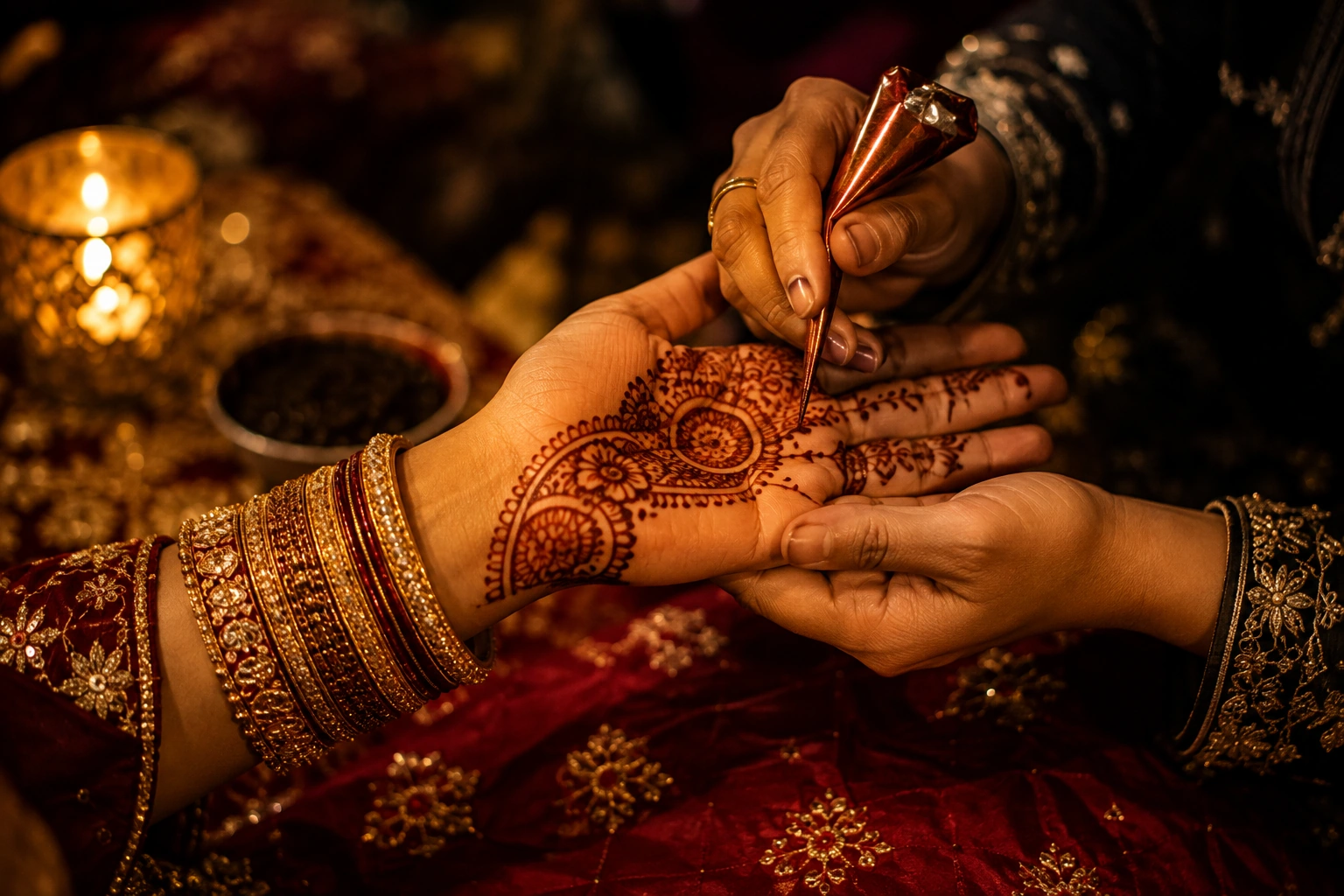
Seated, continuous events
Long stretches with no formal program. The work is reading energy and sustaining it, not hitting cues.
Complete Asian Wedding Planning Guide
How to map a multi-event celebration, and how entertainment, production, and media planning changes from one event to the next.
One celebration or the whole week. Our team communicates in English, Urdu, Hindi and Punjabi, and shared planning carries names, timing and family preferences from one event to the next.
There is no universal Asian wedding. Sequence, naming, emphasis, and formality vary between regions, faiths, families, and generations — and a plan that assumes otherwise will be wrong somewhere. This guide starts from the events you are planning and works outward.
About 14 minutes
Chapter 01
Write one row per celebration. Not one row for the wedding — one row per event. This single move prevents most of the confusion that follows.
Some families plan three events, some plan seven or more. Some run across a weekend, others across two weeks and two cities. The number is not the point; knowing it precisely is.
Mehndi, Sangeet, Haldi, Baraat, Nikah, Reception, and Valima are common examples. They are not a required order, they are not all present at every celebration, and the names your family uses take precedence over any list.
Chapter 02
A Mehndi with seated guests and continuous music has almost nothing in common with a reception program full of cued transitions — except that the same crew should understand both.
Long stretches with no formal program. The work is reading energy and sustaining it, not hitting cues.
Rehearsed sets, ordered lineups, and tracks that must start on an exact beat. Cue sheets are mandatory.
Movement, outdoors, no fixed power. Sound has to travel with people.
Quiet, respectful coverage and clean amplification. The wrong lens or the wrong angle is noticed here.
The largest room, most transitions, most announcements, and the most opportunity for a timeline to slip.
Chapter 03
Family performances are frequently the emotional center of a Sangeet — and a frequent source of technical trouble, because the tracks often arrive late and go untested on the actual system.
Chapter 04
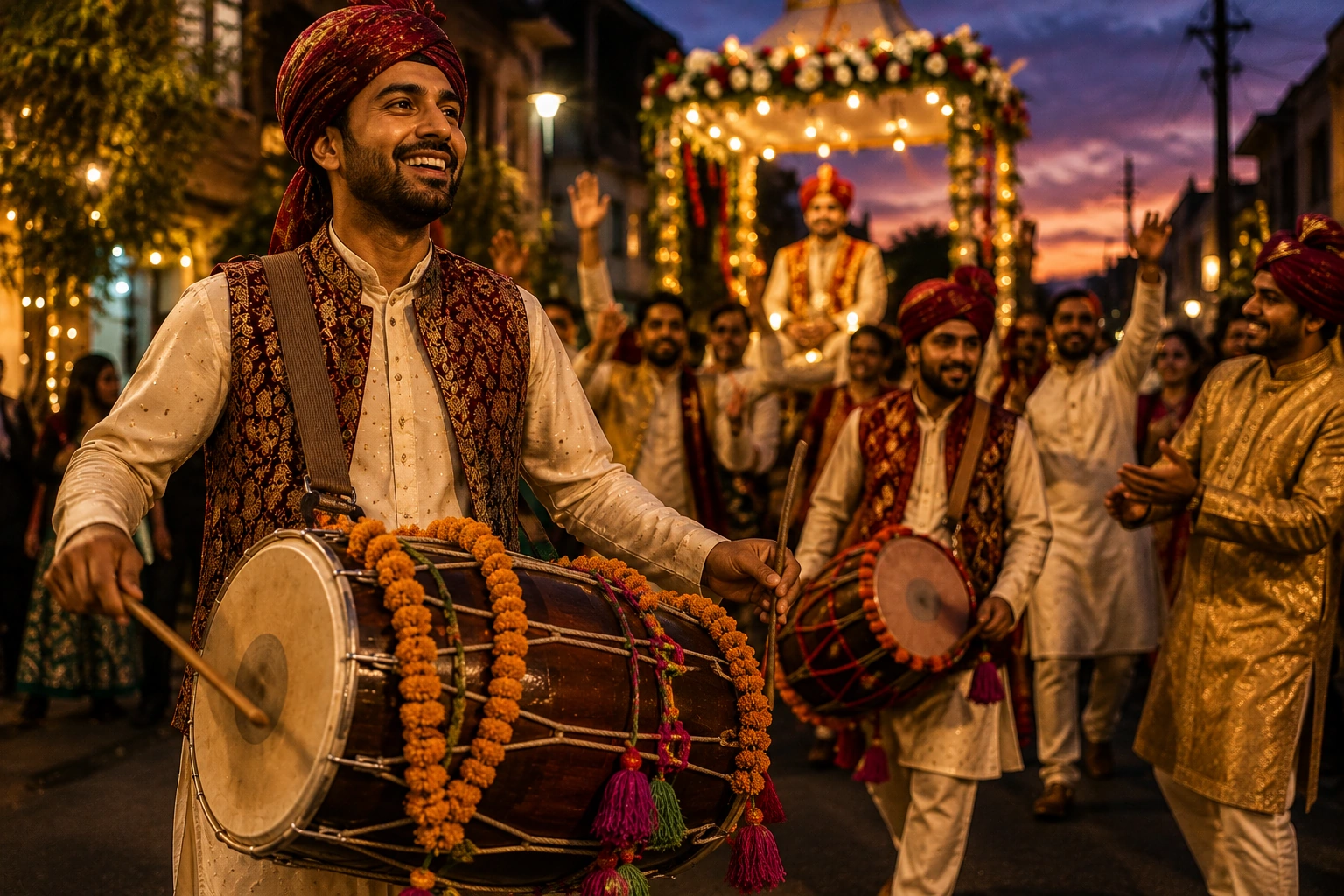
It is outdoors, it moves, it has no fixed power, and it is loud by design. Everything that makes it joyful makes it technically demanding.
Sound has to travel with the procession, carry over a crowd celebrating at full volume, and cope with the weather. Battery capacity, rather than speaker size, is often the limiting factor.
It also needs a route agreed with the venue ahead of time — including where it starts, where it ends, and what happens if it runs long while guests wait inside.
Chapter 05
Coverage spread across separate vendors produces separate bodies of work — different framing instincts, different color, and no shared sense of who the important people are.
A crew that was at the Mehndi already knows the grandmother who should be in every family frame, the uncle who runs the schedule, and the cousin who is actually organizing the performances. By the reception, nothing is being learned for the second time.
It also means the week edits together as one story rather than as a set of unrelated galleries.
Chapter 06
Multi-event weeks rarely fail during an event. They fail in the gap between two of them, when travel, resets, and wardrobe all compete for the same ninety minutes.
Chapter 07
Planning conversations often involve more people than the couple, and the person who answers emails is not always the person who makes decisions.
Chapter 08
One document covering every event, shared with everyone working the week.
Go deeper
Asian Wedding Guide
Map a multi-event wedding week before assigning entertainment, production, and media coverage.
Open checklistAsian Wedding Guide
Questions to ask each venue when a wedding sequence moves across rooms, dates, or properties.
Open checklistPhoto + Video Guide
Decide where coverage matters most before choosing hours, crew size, or deliverables.
Open checklistQuestions, answered
No. We start from the events your family is planning and use the names your family uses. Any list we publish is a set of common examples, not a template.
Yes. Single events, the wedding day and reception together, or the full week are all normal starting points. Multi-event celebrations are quoted individually.
Our team can communicate in English, Urdu, Hindi, and Punjabi. Tell us which events would benefit from language support and we will plan for it.
The next useful step
Even a partial list is enough. Share what is confirmed and we will work through the rest together.